

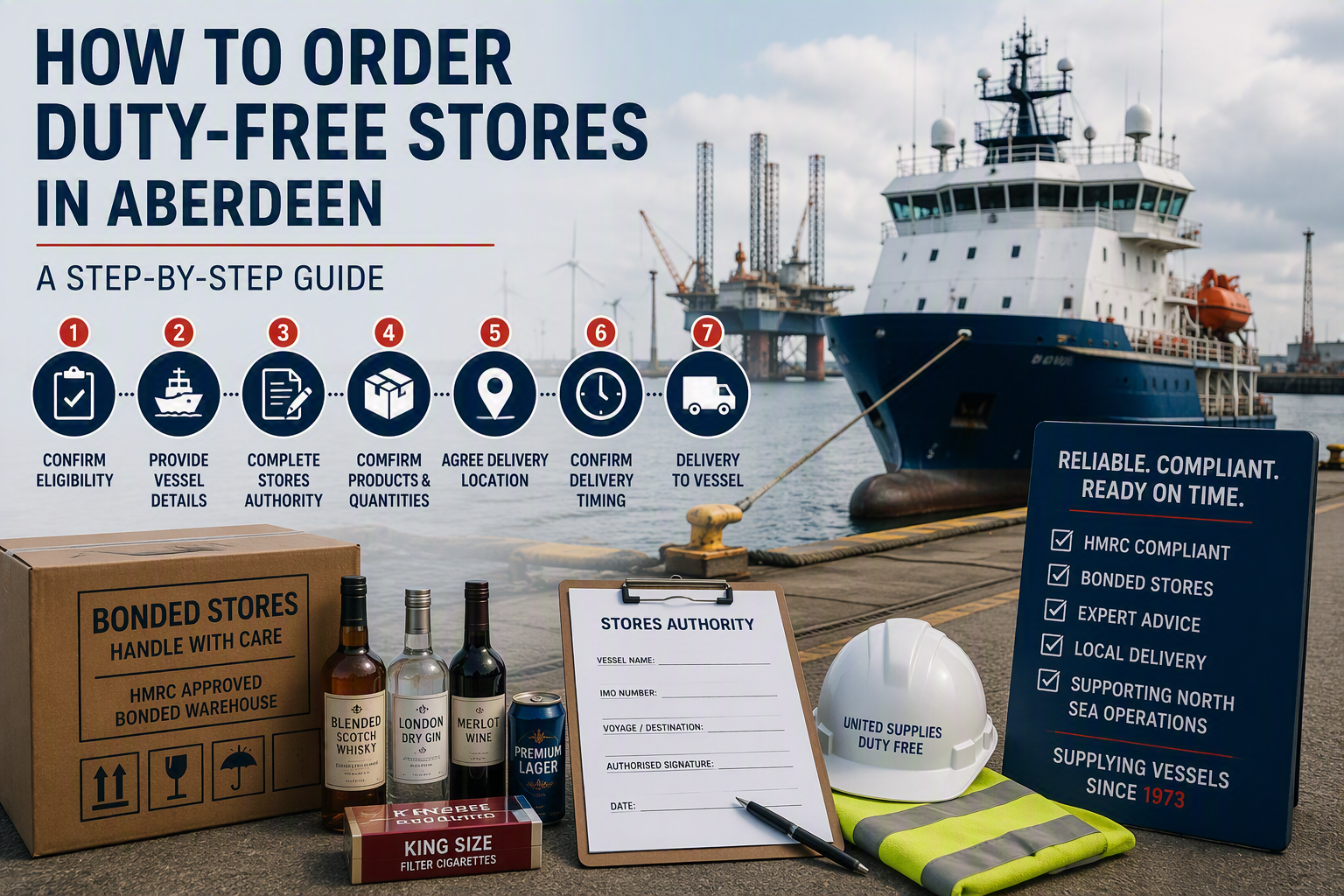
Need to order duty-free stores in Aberdeen? This step-by-step guide explains the process, documentation requirements, vessel eligibility checks and how to avoid common delays.
How do you order duty-free stores in Aberdeen?
In most cases, the process involves confirming vessel eligibility, providing the necessary documentation, agreeing quantities, and arranging delivery to the vessel before sailing. While every vessel is different, most orders follow the same basic steps.
For operators new to the North Sea, duty-free stores can seem more complicated than they really are. There are customs procedures to follow, stores authorities to complete and eligibility requirements to consider, but once the process is understood, ordering stores is generally straightforward.
This guide explains how to order duty-free stores in Aberdeen and highlights a few common mistakes that can delay deliveries.
What Are Duty-Free Stores?
Duty-free stores are goods supplied under customs procedures that allow qualifying vessels to receive certain products without UK duty being paid.
Typical products include:
- Cigarettes
- Tobacco products
- Spirits
- Beer
- Wine
These goods are usually held within an HMRC-approved bonded warehouse until they are supplied to an eligible vessel.
Step 1: Confirm That Your Vessel May Be Eligible
Before discussing quantities or delivery arrangements, the first question is whether the vessel may qualify for duty-free stores.
Eligibility depends on factors such as:
- Vessel type
- Voyage details
- Operational activity
- Customs status
- Supporting documentation
Common vessel types that may request bonded stores include:
- Platform Supply Vessels (PSVs)
- Offshore Support Vessels (OSVs)
- Survey Vessels
- Construction Support Vessels
- Accommodation Vessels
- Service Operation Vessels (SOVs)
The assessment should always be based on the specific operation being undertaken rather than assumptions about the vessel itself.
Step 2: Gather the Vessel Information
The next stage is providing the information needed to assess the request.
Typical details include:
Vessel Name
The vessel must be correctly identified.
IMO Number
Providing the IMO number helps avoid confusion and ensures documentation is completed accurately.
Operator Details
The supplier may need details of the vessel operator or management company.
Voyage Information
Details of the planned voyage or operational activity are usually required as part of the eligibility assessment.
Having this information ready at the outset speeds up the process considerably.
Step 3: Complete the Stores Authority
The stores authority is one of the most important documents involved in bonded stores supply.
It authorises the release of duty-free stores and forms part of the customs audit trail.
Depending on the circumstances, it may be signed by:
- The master
- The vessel operator
- An authorised representative
- A vessel agent acting with authority
Incomplete stores authorities remain one of the most common reasons for delays.
Step 4: Confirm Product Requirements
Once eligibility and documentation are being addressed, the next step is confirming exactly what is required.
Typical considerations include:
- Product type
- Brand preferences
- Quantities required
- Delivery timing
Providing accurate information early helps suppliers prepare the order and avoid last-minute changes.
Step 5: Agree the Delivery Location
In Aberdeen, delivery arrangements are often coordinated around vessel schedules and berth availability.
Questions usually include:
- Which berth will the vessel use?
- What is the expected sailing time?
- When will cargo operations be completed?
- Are there any access restrictions?
Ports can be busy places, and coordination is important if deliveries are to arrive smoothly.
Step 6: Confirm Delivery Timing
Vessel schedules frequently change.
Weather delays, operational adjustments and port activity can all affect departure plans.
For that reason, suppliers generally appreciate updates regarding:
- Changes to sailing times
- Berth changes
- Delayed arrivals
- Revised mobilisation schedules
Keeping everyone informed helps avoid unnecessary complications.
Step 7: Delivery to the Vessel
Once documentation has been completed and stores prepared, the goods can be delivered to the vessel.
This is usually coordinated with:
- Vessel agents
- Port authorities
- Operators
- Masters
- Logistics personnel
The objective is simple: ensure stores are delivered correctly and in sufficient time before departure.
What Documentation Should Be Ready Before Ordering?
Although requirements vary, operators should generally be prepared to provide:
✅ Vessel name
✅ IMO number
✅ Voyage details
✅ Stores authority
✅ Delivery information
✅ Authorised signatures where required
Having these readily available can significantly reduce turnaround times.
How Far in Advance Should Stores Be Ordered?
As a rule, earlier is better.
The most straightforward orders are often the ones discussed well before sailing.
Interestingly, after decades supplying North Sea vessels, the issue that causes the most disruption is not usually eligibility or customs compliance.
It is timing.
A vessel mobilisation may have been planned for weeks, but the stores order appears only a few hours before departure.
At that stage, pressure increases for everyone involved.
The operators who experience the smoothest deliveries typically raise stores requirements during voyage planning rather than immediately before sailing.
What Happens if Plans Change?
They usually do.
Anyone involved in offshore operations knows that schedules rarely stay exactly as planned.
Changes may involve:
- Revised sailing times
- Different berths
- Delayed arrivals
- Extended operations
The important thing is communication.
Most issues can be managed if suppliers receive notice as early as possible.
Why Use a Local Supplier in Aberdeen?
For vessels operating throughout the North Sea, local knowledge can make a real difference.
A supplier familiar with:
- Aberdeen Harbour
- Offshore vessel operations
- Port procedures
- Mobilisation schedules
- North Sea energy projects
is often well placed to respond efficiently when circumstances change.
That practical understanding is particularly valuable during busy periods when offshore activity is high.
A Simple Ordering Checklist:
Before ordering duty-free stores in Aberdeen, make sure you can answer “yes” to the following:
- Have vessel details been confirmed?
- Have voyage details been provided?
- Has eligibility been discussed?
- Is the stores authority complete?
- Have product quantities been agreed?
- Has the delivery location been confirmed?
- Is the sailing schedule up to date?
Working through this checklist can prevent most avoidable delays.
Final Thoughts:
Ordering duty-free stores in Aberdeen is usually a straightforward process when eligibility, documentation and delivery arrangements are addressed early.
The key is not to leave the conversation until the day of sailing.
Confirm the vessel details, complete the paperwork, communicate any schedule changes and work with an experienced supplier familiar with North Sea operations.
That simple approach helps ensure your stores are on board before departure and your mobilisation remains on schedule.
If you’re arranging a North Sea sailing from Aberdeen and need duty-free stores, speak to our team before mobilisation and we’ll guide you through the process from start to finish.
Related Reading:
- Which North Sea Vessels Qualify for Duty-Free Stores? An Eligibility Checklist
- The Complete Guide to Duty-Free Supply in the North Sea (2027 Edition)
- Duty Free at Sea: A Plain-English Guide to Bonded Stores for North Sea Vessels
- Can Offshore Wind Vessels Take Duty-Free Stores? What Operators Need to Know